
Disclosure: As an Amazon Associate I earn from qualifying purchases. How this site works
Sink Materials
Match the material to your cooking and cleaning habits.
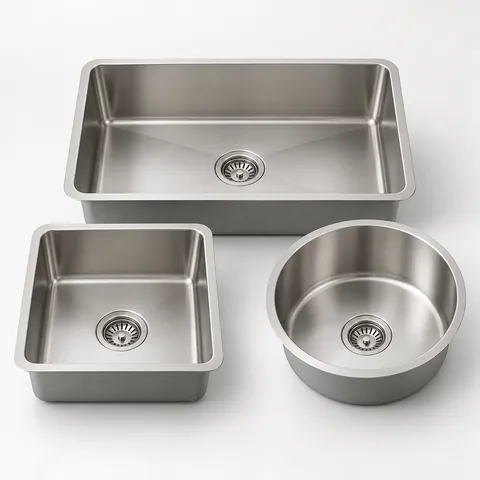 Stainless undermount sinks
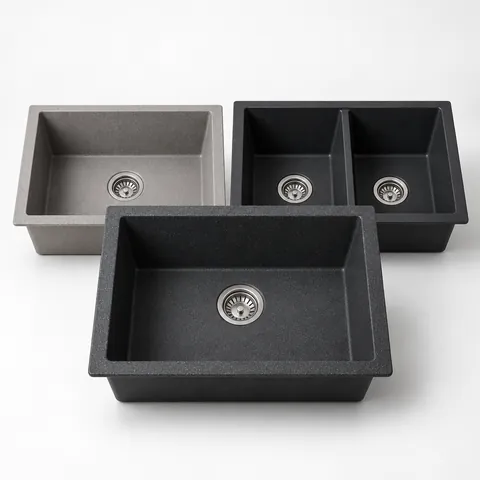 Composite granite sinks
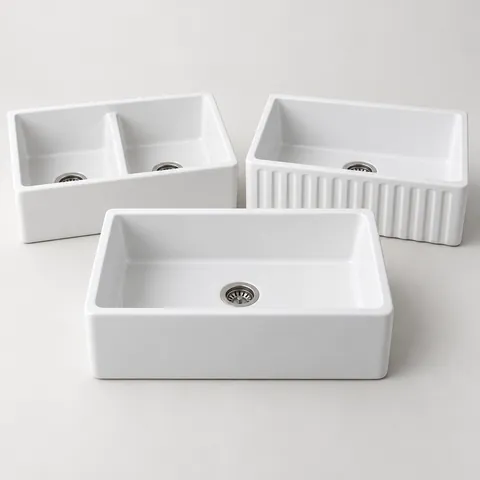 Fireclay sinks
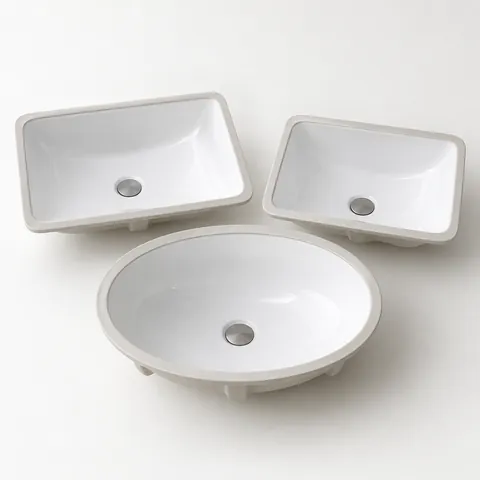 Bathroom undermount sinks
Quick comparison
| Material | Weight | Noise | Care |
|---|---|---|---|
| Stainless | Light | Can be noisy | Easy |
| Composite | Medium | Quiet | Non-abrasive cleaners |
| Fireclay | Heavy | Quiet | Avoid heavy impacts |
| Cast iron | Very heavy | Quiet | Protect enamel |
Choosing
- Busy family kitchens often choose 16–18 gauge stainless or composite.
- Farmhouse styles often use fireclay.
See stainless, composite and fireclay sinks.
Which undermount sink material is best for your kitchen?
The best material depends on what you do at the sink every day. A cook who washes sheet pans, cast iron, and sharp knives needs a different surface than someone who mostly rinses coffee cups and loads a dishwasher. Start with durability, noise, care, and weight before you think about color or shape.
| Material | Best fit | Main trade-off |
|---|---|---|
| Stainless steel | Frequent cooking, heavy cleanup, modern kitchens | Shows water spots and can sound louder without padding |
| Granite or quartz composite | Homeowners who want a quiet, matte, darker sink | Needs gentle cleaners and careful rinsing to avoid haze |
| Fireclay | Traditional, farmhouse, and bright white kitchens | Heavy and can chip if hit hard at an edge |
| Enameled cast iron | Classic kitchens where weight is not a problem | Very heavy and the enamel must be protected |
| Solid surface | Integrated countertop designs and low-contrast looks | Can scratch more easily than harder materials |
For a practical all-around kitchen, stainless steel is usually the easiest material to live with because it handles heat, soaking, and everyday impacts well. Look for sound-dampening pads or coating on the underside if noise bothers you. If you want to compare common sizes and bowl layouts, start with stainless undermount sinks.
Composite sinks are a strong choice when you want a quieter bowl and a surface that does not look like metal. They are often chosen in black, gray, or beige tones to blend with stone counters. If that look fits your kitchen, compare composite undermount sinks by bowl depth, drain location, and cabinet fit.
Fireclay is more about style and feel. It has a glossy, substantial look that pairs well with apron-front designs, but the sink and countertop need proper support. If you are planning a farmhouse-style undermount or apron installation, review fireclay undermount sinks carefully for minimum cabinet size and mounting details.
What to check before choosing a heavy sink material
Undermount sinks hang from the underside of the countertop and are sealed at the rim. The heavier the material, the more important the cabinet, countertop, support frame, and installer become. This is especially true for fireclay and enameled cast iron.
- Confirm the minimum cabinet width. Do not assume a sink will fit because the outside dimensions look close. The bowl, mounting hardware, faucet holes, disposal, and plumbing all need room.
- Check countertop compatibility. Stone, quartz, and solid surface counters are common with undermount sinks. Laminate needs a compatible undermount system and careful edge protection.
- Plan support for heavy sinks. Large fireclay and cast iron sinks may need a cradle, rails, or blocking inside the cabinet instead of relying only on clips and adhesive.
- Look at the reveal. A positive reveal leaves a little rim visible, a zero reveal lines up with the sink edge, and a negative reveal lets the counter overhang the bowl. Each changes cleaning and appearance.
- Ask how the sink will be serviced later. A sink that is glued, clipped, and boxed in by plumbing can be difficult to remove if it cracks or the countertop is replaced.
Weight also affects delivery and handling. A light stainless sink can often be moved by one person, while a large fireclay or cast iron sink may require two people and extra care to avoid damaging cabinets, floors, or the countertop opening.
If you are replacing an existing undermount sink, the safest path is to match the current cutout as closely as possible. A smaller replacement may expose unfinished counter edges. A larger one may not leave enough stone or quartz around the opening for a secure mount.
How do the materials hold up to scratches, stains, and heat?
No sink material stays perfect without care. The right question is not whether a sink can scratch or stain, but how visible the marks are and how hard they are to manage.
Stainless steel
Stainless can scratch, but fine scratches tend to blend into the grain over time. Brushed finishes are more forgiving than mirror-like finishes. Water spots are common, especially in hard-water areas, so drying the bowl after use helps the sink look cleaner.
Composite
Composite resists many everyday marks, and darker colors can hide coffee, tea, and food stains better than white materials. The trade-off is that mineral film, soap residue, or harsh cleaners can leave a dull look. Use non-abrasive cleaners, rinse well, and avoid metal scouring pads.
Fireclay
Fireclay has a hard glazed surface that is easy to wipe clean, but it is not immune to chips. The most vulnerable areas are corners, edges, and the front lip on apron-style sinks. A bottom grid can help protect the floor of the bowl from dropped pans.
Enameled cast iron
Cast iron is strong, but the enamel coating is the surface you live with. Once the enamel is damaged, the exposed area can discolor or rust. Avoid dropping heavy cookware, and do not use aggressive abrasives that can dull the finish.
Heat tolerance also depends on the exact product, not just the material category. A sink may handle hot water but still have limits for direct contact with very hot pans. When in doubt, set hot cookware on the stovetop, a trivet, or a rack instead of the sink bottom.
How to match sink material with countertop color and style
A sink takes up a large visual space in the counter, so material choice affects the whole kitchen. Stainless steel creates contrast with most counters and matches common faucets and appliances. It is a safe choice if you plan to change cabinet color, backsplash, or hardware later.
Composite works well when you want the sink to recede into the countertop. A black or charcoal sink can look built-in with dark counters, while a lighter composite can soften the contrast in beige, cream, or warm-toned kitchens. Check the sink color in your own lighting, because matte surfaces can look different under warm bulbs than they do online.
White fireclay and white enamel make the sink a focal point. They can brighten a kitchen, but they also show dark scuffs, metal marks, and food residue more quickly than dark surfaces. If you want a low-contrast look, compare the sink sample with the countertop sample rather than relying on the word white.
- Choose stainless if you want flexibility with future design changes.
- Choose composite if you want a quieter, less reflective sink in a specific color.
- Choose fireclay if the sink is part of the kitchen style, not just a utility fixture.
- Choose enameled cast iron only after confirming the cabinet and counter can handle the weight.
- Choose solid surface when a seamless or near-seamless look matters more than maximum impact resistance.
Simple care rules by material
Good care is mostly about avoiding the wrong cleaner. Undermount sinks also need attention at the rim, where grime can collect along the countertop edge.
- Rinse after messy jobs. Tomato sauce, coffee, tea, and salty liquids are easier to remove before they dry.
- Use a soft sponge or cloth for routine cleaning. Save abrasive pads for materials and situations where the manufacturer specifically allows them.
- Dry the sink when appearance matters. This helps with water spots on stainless and mineral haze on composite.
- Keep the rim clean. Wipe the underside of the counter edge so food film does not build up where the sink meets the countertop.
- Use a bottom grid when you regularly wash heavy cookware. It can reduce direct impact on fireclay, enamel, and stainless surfaces.
- Avoid standing chemicals. Do not leave bleach solutions, drain cleaners, or strong descalers sitting in the bowl unless the sink maker says they are safe.
For any material, save the installation guide and care sheet. If a cleaning product damages the finish, the general material name may not matter. The manufacturer’s care rules are what you should follow for that specific sink.
Frequently asked questions
Is stainless steel or composite better for an undermount kitchen sink?
Stainless steel is better if you want the easiest all-around care and do not mind some water spots or sound. Composite is better if you want a quieter sink with a matte color, but it needs non-abrasive cleaners and thorough rinsing to avoid residue.
Do fireclay undermount sinks chip easily?
Fireclay is hard and durable for normal kitchen use, but it can chip if a heavy pan hits an edge or corner. A bottom grid and careful handling of cast iron, baking sheets, and large pots can reduce the risk.
What sink material is best for hard water?
No material completely avoids hard-water spots. Stainless may show spots quickly, while dark composite can show pale mineral film if it is not rinsed and dried. If you have hard water, choose a material you are willing to wipe dry and avoid harsh buildup removers unless approved by the manufacturer.
Can any undermount sink be installed under quartz or granite?
Many undermount sinks can be installed under quartz or granite, but the sink size, cutout, reveal, clips, and support method must match the countertop and cabinet. Heavy sinks may need extra support beyond standard mounting clips.
Which undermount sink material is lowest maintenance?
Stainless steel is usually the lowest maintenance for busy kitchens because it tolerates frequent cleaning and everyday use well. If appearance is the priority, remember that stainless can still show scratches and water spots, so a brushed finish and regular drying help.
Disclosure: As an Amazon Associate I earn from qualifying purchases. This site may earn a commission when you buy through its links, at no extra cost to you. Product details come from public manufacturer information; always check the merchant page for current specifications and prices. We have not hands-on tested the products described here.