
Disclosure: As an Amazon Associate I earn from qualifying purchases. How this site works
Bathroom Undermount Sinks
Bathroom undermount sinks are usually vitreous china or ceramic.
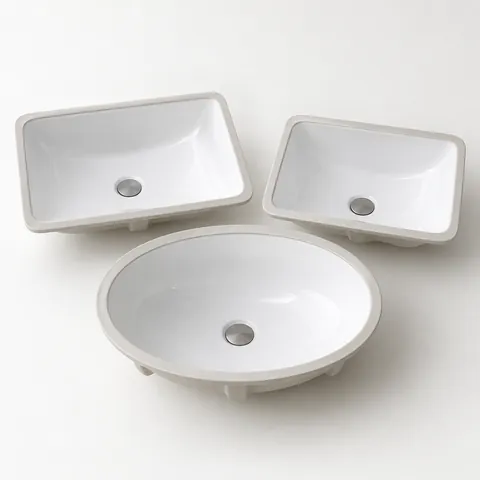 Bathroom undermount sinks
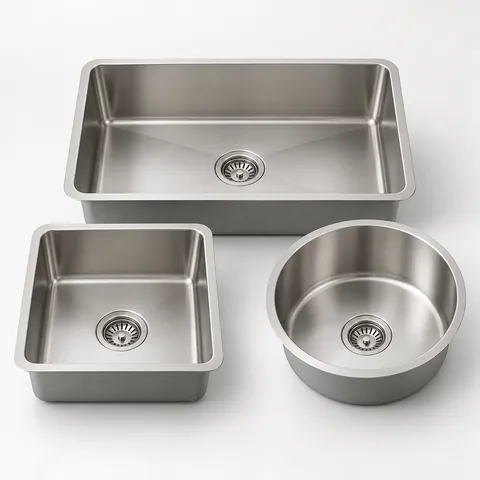 Stainless undermount sinks
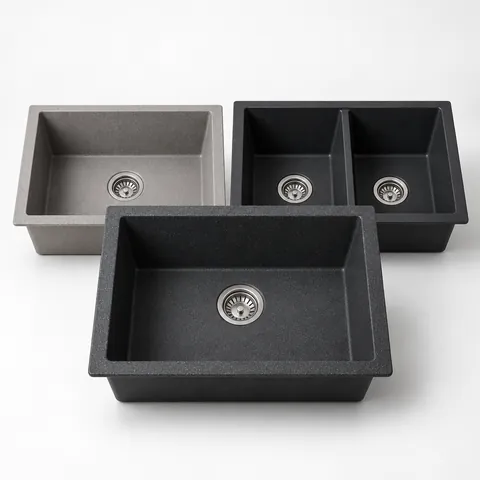 Composite granite sinks
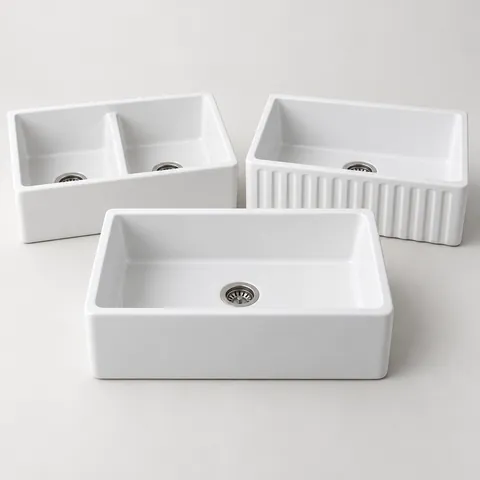 Fireclay sinks
What to check
- Bowl size relative to vanity depth.
- Overflow hole if required by your plumbing.
- Faucet reach to the centre of the bowl.
- Template for the countertop cut-out.
Browse bathroom undermount sinks.
What size undermount bathroom sink do I need?
Start with the inside of the vanity, not just the visible countertop. A sink that fits the top can still hit a drawer box, center divider, shutoff valve, or the curved part of the drain trap below. Before buying, open the doors and measure the clear width, clear depth, and available height under the counter.
For a single-sink vanity, many buyers leave several inches of counter on both sides for a soap pump, toothbrush cup, or makeup tray. For a double vanity, the limiting measurement is often the space between the two sink cutouts and the faucet holes, not the total vanity width. If two bowls are too close together, the countertop strip between them becomes narrow and harder to fabricate cleanly.
Bowl depth matters in a bathroom because the user is often leaning over the sink. A deeper bowl can reduce splashing, but it also lowers the drain connection and takes up more cabinet space. In a small powder room, a shallower bowl may make storage and plumbing alignment easier.
- Measure the vanity cabinet from inside wall to inside wall.
- Measure from the inside front rail to the back wall or plumbing line.
- Check whether drawers, shelves, or a U-shaped drawer cutout will interfere with the bowl.
- Confirm the drain tailpiece can drop straight enough to meet the P-trap without sharp offsets.
- Ask the countertop fabricator how much stone or solid-surface material must remain in front of and behind the cutout.
If you are replacing an existing sink and keeping the same top, measure the underside cutout and the outside lip of the old bowl before removing it. Replacement is easiest when the new sink has a similar rim shape and a bowl that fully covers the existing opening from below. If you are shopping from scratch, compare several bathroom undermount sinks only after you know both the cabinet clearance and the countertop fabricator’s minimum edge requirements.
Oval, rectangular, or square: which bathroom undermount sink shape is best?
Shape affects more than style. It changes how much countertop remains around the bowl, how easy the sink is to wipe out, and how modern or traditional the finished vanity looks. Most bathroom undermount sinks are oval or rectangular, with square and specialty shapes used when the vanity design calls for a sharper look.
Oval bowls are forgiving in smaller tops because their rounded ends preserve more countertop at the corners. Rectangular bowls usually give a wider, more contemporary appearance, but their corners need more attention during cleaning. Square bowls can look crisp, yet they leave less room for error if the faucet is slightly off center or the vanity is shallow.
| Shape | Best use | Watch for |
|---|---|---|
| Oval | Traditional vanities, smaller tops, guest baths | Less flat bottom space for setting items in the bowl |
| Rectangular | Modern vanities, wider counters, primary baths | Corners can collect toothpaste residue and need regular wiping |
| Square | Compact contemporary vanities or symmetrical designs | Can feel tight front-to-back if the vanity is shallow |
| D-shaped or specialty | Unusual cabinet layouts or design-driven tops | Replacement choices may be more limited later |
Also consider the reveal, which is the way the countertop edge meets the sink. A negative reveal slightly overhangs the sink rim and hides the joint from above. A positive reveal exposes a small part of the sink rim. A flush reveal lines the counter edge up with the bowl opening. The best choice is partly visual, but it also depends on the fabricator’s comfort and the sink manufacturer’s template.
How to match the sink with the faucet, drain, and overflow
A bathroom undermount sink usually has no faucet deck, so the faucet mounts through the countertop or the wall. This makes planning important because the faucet holes and sink cutout are separate operations. Once the countertop is drilled, moving the faucet later is difficult.
For a deck-mounted faucet, check the spout height and spout projection together. A short spout may drop water too close to the back wall of the bowl. A long spout can aim near the front slope and splash onto the user. A practical target is for the water stream to land near the drain or slightly behind it, while still leaving enough hand space under the spout.
The drain assembly must match the sink style. If the sink has an overflow passage, use a drain made for an overflow sink. If the sink has no overflow, use a no-overflow drain. Mixing these parts can lead to slow drainage, leaks, or water entering a path that was not designed to be sealed.
- Single-hole faucets keep the countertop easier to clean and work well on narrow vanities.
- Widespread faucets need more counter width and careful spacing behind the bowl.
- Wall-mounted faucets save counter space but require rough plumbing in the wall at the correct height.
- Pop-up drains should have enough clearance behind the bowl for the lift rod or cable mechanism, unless the design uses a push-button drain.
Do not assume every overflow opening is in the same place or has the same appearance. Some are front-facing and visible when you stand at the vanity. Others are tucked closer to the back or have a trim cap. If local code, building rules, or personal preference requires an overflow, verify it on the actual product page before ordering.
Countertop materials and installation details to plan before ordering
Undermount bathroom sinks are most often paired with stone, quartz, solid surface, or similar rigid countertop materials. These materials can support a finished cutout edge and hide the sink rim underneath. Standard laminate tops are usually a poor match for undermount installation because the exposed cutout edge can swell if water reaches the core, unless the top is specifically built for that use.
The sink is normally attached from below with adhesive, mechanical clips, brackets, or a combination. The exact method depends on the countertop material and the sink. Heavy bowls should not rely on caulk alone. The sealant is there to block water at the joint, while the mounting hardware or support method holds the load.
Give the fabricator the sink before the top is cut whenever possible. Templates can be useful, but the physical sink helps confirm the real rim, bowl shape, and reveal. Ceramic and china sinks can have small manufacturing variation, so cutting only from a printed template may increase the risk of a mismatch.
- Confirm whether the installer wants the sink on site before templating.
- Decide on the reveal style before fabrication starts.
- Ask how the sink will be supported from below.
- Make sure faucet holes, backsplash thickness, and mirror or medicine cabinet clearance are considered together.
- Leave access under the vanity so clips, brackets, and the drain can be serviced later.
After installation, inspect the underside with a flashlight. Look for continuous sealant at the rim, firm attachment points, and a drain that is not pulling the bowl sideways. Run water for several minutes, fill the bowl partway, then release the drain while checking the trap and tailpiece for leaks.
Cleaning, care, and replacement tips for bathroom undermount sinks
Vitreous china and ceramic bathroom sinks are popular because the glazed surface is hard, smooth, and simple to clean. Use a nonabrasive bathroom cleaner or mild dish soap with a soft sponge for routine wiping. Avoid harsh scouring pads on glossy finishes because they can dull the surface over time, especially around the drain and front edge where hands and cleaning tools hit most often.
The seam where the counter meets the sink deserves regular attention. Wipe it dry when water collects there, especially with a positive reveal that exposes part of the sink rim. If the sealant becomes dark, loose, cracked, or gummy, it may need to be removed and replaced rather than scrubbed harder.
Overflow passages can develop odor if soap film sits inside them. Periodically rinse the overflow opening with warm water, then follow with a small brush made for tight spaces if the sink manufacturer allows it. Do not force metal tools into the passage or use chemicals that conflict with the sink or drain manufacturer’s instructions.
If you later replace the sink but keep the top, the existing cutout controls your options. A new sink must cover the opening, align with the drain, and fit the cabinet below. For this reason, very unusual shapes can be harder to replace years later than common oval or rectangular bowls. Keep the product sheet, template, or order information with your home records so a future replacement is easier to match.
Frequently asked questions
Can you put an undermount sink in any bathroom vanity?
No. The vanity must have enough interior clearance for the bowl, drain, trap, and mounting hardware. Drawer vanities need extra checking because the bowl may interfere with drawer boxes or center supports.
Are undermount bathroom sinks hard to replace?
They can be more involved than drop-in sinks because they are attached under the countertop and sealed at the rim. Replacement is easiest when the new sink matches the old cutout and the countertop can stay in place without damaging the surface.
Do bathroom undermount sinks need an overflow?
Not always, but many bathroom sinks include one and some plumbing situations may require it. If you choose a sink with an overflow, use a compatible drain assembly; if you choose a no-overflow sink, use a no-overflow drain.
What countertop works best with an undermount bathroom sink?
Quartz, granite, marble, and solid-surface tops are common choices because the cut edge can be finished and the sink can be supported from below. Basic laminate is usually not ideal unless it is specifically designed and fabricated for undermount use.
Should the countertop overhang the sink or show the sink rim?
That is the reveal choice. A negative reveal hides the rim slightly, a positive reveal shows a small rim, and a flush reveal lines up with the bowl. The right option depends on the look you want and what your fabricator can execute cleanly with that sink.
Disclosure: As an Amazon Associate I earn from qualifying purchases. This site may earn a commission when you buy through its links, at no extra cost to you. Product details come from public manufacturer information; always check the merchant page for current specifications and prices. We have not hands-on tested the products described here.